Valley Forge from Philadelphia: The Free Park, the Winter That Was the Battle, and the Ten-Mile Loop
No battle happened at Valley Forge — that’s the point. Forty minutes from Philadelphia, the winter camp where a starving army drilled itself into one is free, green, and best read by its loop road.
The short version
- Valley Forge National Historical Park sits about 40 minutes northwest of Center City with free admission and parking — the rare headline park with no gate at all; details at nps.gov/vafo.
- The 1777–78 winter encampment held some 12,000 Continental soldiers; roughly 2,000 died of disease and exposure — and the army that emerged, drilled daily by von Steuben into a professional force, marched out in June transformed.
- The visitor center’s exhibits and film frame the loop; the reconstructed Muhlenberg Brigade huts show the twelve-man log quarters the army built itself in weeks.
- Washington’s Headquarters — the actual stone house the general rented and ran the war from — anchors the far end of the loop, restored to its working winter.
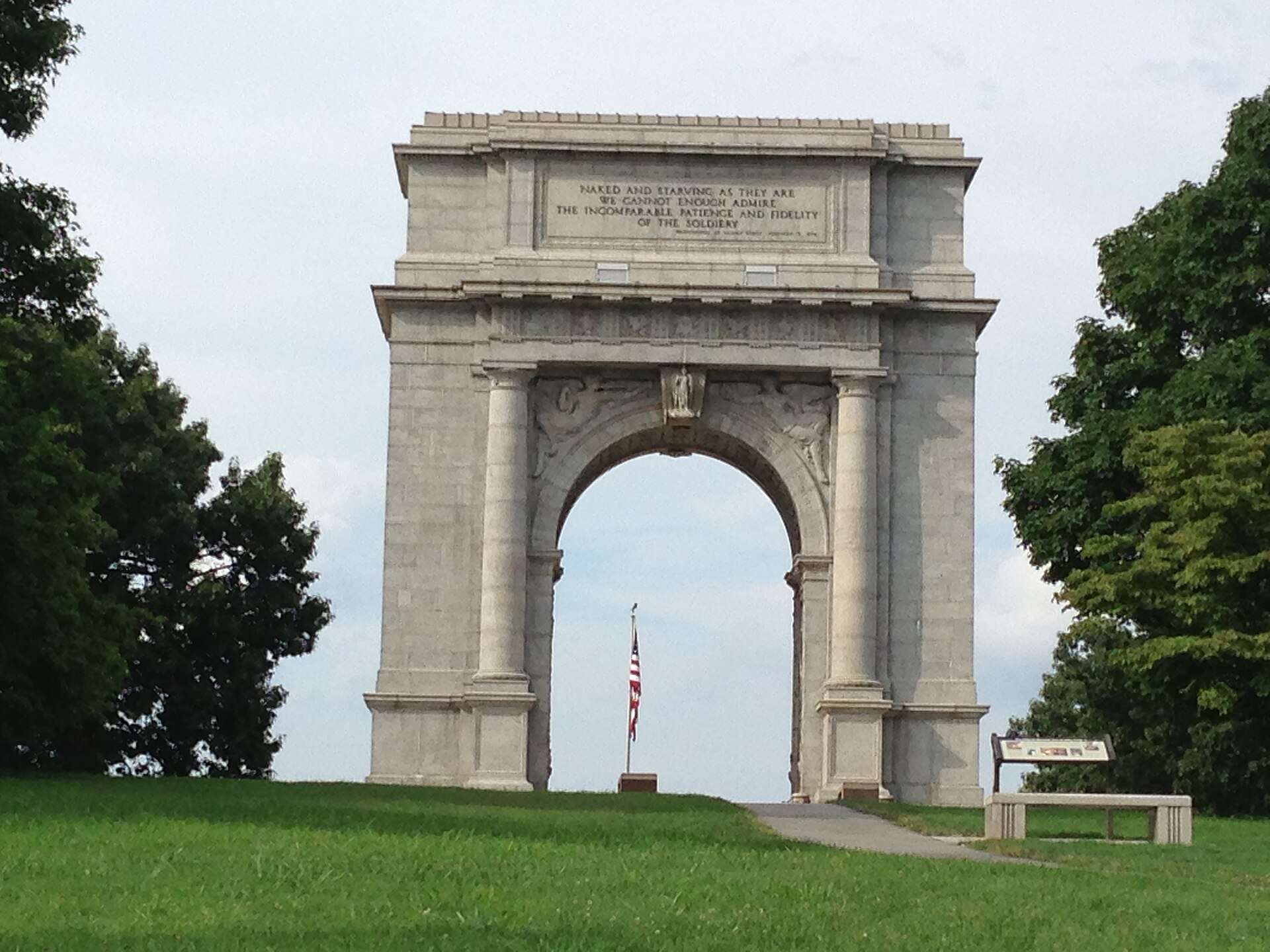
- The National Memorial Arch, the artillery park’s cannon line, and von Steuben’s statue overlooking the Grand Parade (where the drilling happened) mark the loop’s other essential stops.
- The park doubles as the region’s great green space — 30-plus miles of trails, meadow deer at dusk, and the Schuylkill river bend — which is why locals treat it as theirs; regional context at valleyforge.org.

Getting there
The Schuylkill Expressway or the surface routes deliver the visitor center in about 40 minutes from Center City — this is a drive, per the alarm, with SEPTA’s nearest service leaving an unlovely last-mile gap. The loop road (Route 23 and the park drives) strings every major stop with pull-offs; cyclists ride the same circuit on the multi-use trail with the advantage of the meadows’ pace. Trolley-style guided tours run seasonally from the visitor center for the car-free-by-choice.
The visit
Visitor center first for the eighteen minutes of film and the map that converts hills into history. Then the loop in order: the Muhlenberg huts (step inside one — the twelve-bunk arithmetic lands harder than any plaque), the Memorial Arch’s inscription, the artillery park, and von Steuben’s statue over the Grand Parade — stand there with the film fresh and the empty field fills with drill lines. Washington’s Headquarters takes the longest stop: the rooms where the general, his staff, and the espionage of a starving winter operated in a space smaller than most modern kitchens. The Washington Memorial Chapel (privately run, carillon and all) adds an optional coda. Dusk brings the deer out to the meadows in numbers that startle first-timers — the loop’s last lap is worth driving slow.
When to go
April to June and September to November give the meadows their color and the trails their temper. Summer runs hot and green with full picnic traffic; winter is the method-acting visit — the fields in February mean something the placards can’t, and the park stays open and free. Anniversary encampment weekends (December’s march-in, June’s march-out) add living-history programs worth timing for. Any clear evening, the dusk deer and the arch at golden hour repay a late loop.
Frequently Asked Questions
Why is Valley Forge so famous if nothing was fought here?
Because the war was nearly lost here without a shot — supply collapse, disease, and desertion almost dissolved the army, and the winter’s survival plus von Steuben’s drilling produced the force that fought on equal terms afterward. It’s the republic’s endurance story, which is why the myth-making started early.
How much is myth?
The starving-barefoot-in-snow imagery is compressed: the winter was more wet than arctic, and the deaths came from disease in spring as much as cold. The park’s telling is honest about this — the real story (logistics, drill, and politics) is better than the postcard version anyway.
Is it worth it for kids?
The huts, cannon, and open ground make it one of the region’s best history-with-running-room days — free helps. The junior-ranger program and seasonal musket demos do the engagement work.
Valley Forge or Gettysburg?
Different weights: Gettysburg (documented on this network from DC) is the battle at full scale and wants a full day-plus; Valley Forge is the endurance chapter at 40 minutes’ reach. Philadelphia-based history travelers do this one first and easiest.
Can I combine it with anything?
King of Prussia’s mall economy sits ten minutes away for the retail-inclined half of a divided car, and the Schuylkill River Trail links toward the city for cyclists. The park itself, done properly, fills the honest half day.